CHILE NO TIENE ENERGIA SUFICIENTE PARA AFRONTAR EL CRECIMIENTO BUSCADO Y ESPERADO POR TODOS. LOS BIOCOMBUSTIBLES SON PARTE DE LA SOLUCION. TU NO ESTAS SOLO O SOLA EN ESTE MUNDO SI TE GUSTA UN ARTICULO, COMPARTELO, DIFUNDELO EN LAS REDES SOCIALES, TWITTER, FACEBOOK.

jueves, julio 30, 2009

jatropha; biofuels & jatropha

Dear Colleague,

This is your last chance to benefit from our earlybird discount – click here to have a delegate sales manager contact you

Central American countries have great potential to grow their biofuels industries, and as a result stimulate economic growth in rural areas, whilst jatropha is beginning to be recognized as a commercially viable feedstock for biofuels production across the region.

Why attend Biofuels Markets & Jatropha Americas?

  • Find out about new biofuels legislations and their market impact 
  • Have your say and question the experts in interactive sessions from Mexico, Guatemala, USA, Germany, El Salvador,
    Colombia, Ecuador, Brazil, Argentina, Italy
    and the Netherlands 
  • Identify your finance options and additional carbon credit revenues
  • Receive an update on the latest sustainability criteria for biofuels 
  • Review the latest refining and processing technologies 
  • Find out about governmental jatropha growing schemes and policies
  • See how GHG emissions from Jatropha products can be tracked and reduced
  • Hear the latest research on genetic varieties, best agronomic practices and harvesting machinery
  • Meet new potential clients, partners and suppliers  - all under one roof

Click here to download Biofuels brochure
Click here to download Jatropha brochure
Click here to register
 
Benefit from expert advice:

  • Francisco López Tostado, Mexican Undersecretary of Agriculture, Ministry of Agriculture, Livestock, Rural Development, Fisheries and Food (SAGARPA)
  • Miguel Almada, National Director, Biofuels Program, Argentine Ministry of Agriculture 
  • Salvador Rivas, Director of Energy, El Salvador Ministry of Mines and Energy 
  • Hugo Altomonte, Head Natural Resources and Infrastructure Division, CEPAL
  • Rafael A. Arellanes Caballero, General Coordinator, Union of Bioenergy Companies Chiapas
  • Christian Langaard, Managing Partner, Euro-Latin Capital 
  • German Cruz, Bioenergy Specialist, Inter American Development Bank 
  • Kirk Haney, Chief Executive Officer, SG Biofuels 
  • Mike Lu, Chief Executive Officer , Curcas Diesel Brasil & President, Brazilian Association of Jatropha Growers 
  • William Grathwohl, Chief Executive Officer, Biogreen Oil 
  • Thilo Zelt, Director, Jatropha Sustainable Biofuels Alliance 
  • Kevin Conley Smith, Vice President for Latin America, Abundant Biofuels Corp 
  • Daniel T. Colbert, President and Chief Operating Officer, JatrophaBioJet Corporation 
  • Tammy Klein, Executive Director, Global Biofuels Center & Americas, Hart Energy Consulting 
  • Raúl Félix, Coordinator Climate Change & Renewable Energy Practice, Baker & McKenzie 
  • Alfredo Langesfeld, Chief Executive Officer, GEA Biodiesel 
  • Jorge López Morton, Founder, Total Energy Systems 
  • Dr. Lionel Fernando López, Country Director Guatemala, TechnoServe
  • José Heriberto Mendoza, Senior Agronomist, National Institute of Agricultural Research (INIAP)
  • Axel Ingendoh, Technical Manager Antioxidants, Lanxess 
  • Abdias Eduardo, Pontes Director, TDI Máquinas Agrícolas 
  • Alberto Carrillo Pineda, Country Manager Mexico, South Pole Carbon Asset Management
  • Ricardo Asturias, Director General, Biocombustibles de Guatemala
  • Jayant Godbole, Regional Office Americas, PRAJ Industries
  • Jairo Benavides, Deputy Director, Planning Institute for Energetic Solution (IPSE)

No matter what your interest, Biofuels Markets & Jatropha Americas is the key regional event for you and your company. You can register for all three days or pick the day(s) most suited to your specialism.  Click here for more details

Green Power Conferences produce many high quality BioEnergy conferences which attract senior level delegates from across the globe. Upcoming conferences include:

Next Generation Biofuels
Developing emerging feedstocks, commercial strategies & advancements in conversion technologies
Amsterdam, The Netherlands, 28-30 September 2009

Event Details l Register


Algae Fuels Forum
Amsterdam, The Netherlands, 28-30 September 2009

Event Details l Register


Developing a Biogas Project led by Biogas Energy
Pre-conference Workshop at Biogas USA
San Francisco, USA, 30 September 2009

Event Details l Register


Biogas - USA
Scaling up biogas production in North America
San Francisco, USA, 1-2 October 2009

Event Details l Register


Biofuels Markets Mexico and Central America
Attracting investment to scale up biofuel production in Mexico & Central America
Mexico City, Mexico, 7 October 2009

Event Details l Register


Jatropha Americas Markets
Driving the development of sustainable biodiesel from Jatropha Curcas
Mexico City, Mexico, 8-9 October 2009

Event Details l Register


Bioenergy Markets West Africa
Enabling sustainable biopower, biogas & biofuels development in West Africa
Accra, Ghana, 27-29, October 2009

Event Details l Register

World Biofuels Markets
Where the biofuels industry meets to do business
Amsterdam, The Netherlands, 15-17 March 2010

Event Details l Enquire/Pre-register l Newsletter


Founded in 2003, Green Power Conferences was the first dedicated company to offer professionally organised events focusing on the renewable energy, climate change and sustainability sectors. We have now welcomed over 10,000 delegates from 92 countries and built a global database of 400,000+ contacts. Our expertise lies in producing high quality, interactive conferences that provide ample networking opportunities for delegates and partners alike.

Each event is developed by a team of market research professionals who ensure our events provide in-depth discussions and the latest industry updates in these fast-moving sectors. With a global portfolio of 50+ events, Green Power Conferences is helping to accelerate the uptake of renewable energy, climate change mitigation projects and sustainable business practices from Rio to Hong Kong. We also walk the talk, by offsetting all our commercial activities through renewable energy projects around the world.

Join our Green Energy Training Group on LinkedIn - click here


Fuente:
Difundan libremente  este artículo
CONSULTEN, OPINEN , ESCRIBAN .
Saludos
Rodrigo González Fernández
Diplomado en "Responsabilidad Social Empresarial" de la ONU
Diplomado en "Gestión del Conocimiento" de la ONU
 
www.consultajuridica.blogspot.com
www.el-observatorio-politico.blogspot.com
www.lobbyingchile.blogspot.com
www.calentamientoglobalchile.blogspot.com
www.respsoem.blogspot.com
Oficina: Renato Sánchez 3586 of. 10
Teléfono: OF .02- 2451113 y  8854223- CEL: 76850061
e-mail: rogofe47@mi.cl
Santiago- Chile
Soliciten nuestros cursos de capacitación  y consultoría en LIDERAZGO -  GESTION DEL CONOCIMIENTO - RESPONSABILIDAD SOCIAL EMPRESARIAL – LOBBY – ENERGIAS RENOVABLES   ,  asesorías a nivel nacional e  internacional y están disponibles  para OTEC Y OTIC en Chile

jueves, julio 23, 2009

Minicentrales de biomasa móviles

Minicentrales de biomasa móviles

Posted: 22 Jul 2009 06:05 PM PDT

minicentral-biomasa

La empresa finlandesa GasEK ha desarrollado un sistema de gasificación de biomasa con baja humedad (45%) que ha implementado en una minicentrales energéticas de producción eléctrica y calor que pueden ser transportadas en un camión.

Solventando la limitación de humedad de la biomasa puede ser una muy buena solución para la producción de energía en lugares apartados. Incluso supongo que podría emplearse el calor producido en secar la biomasa materia prima para la generación eléctrica.

Me parece un sistema con muchas aplicaciones y gran proyección para los lugares donde la biomasa no es un problema. Estas minicentrales funcionan sobre todo con astillas de madera pero soportan otros residuos para funcionar.

Este tipo de desarrollos junto con los avances de otras empresas como la danesa Dall Energy que han logrado un proceso eficiente de gasificación de biomasa con una humedad hasta del 60% pueden impulsar el uso de esta materia prima, al menos en Europa.

Referencias: Expobioenergía, GasEK, DallEnergy.


Fuente:
Difundan libremente  este artículo
CONSULTEN, OPINEN , ESCRIBAN .
Saludos
Rodrigo González Fernández
Diplomado en "Responsabilidad Social Empresarial" de la ONU
Diplomado en "Gestión del Conocimiento" de la ONU
 
www.consultajuridica.blogspot.com
www.el-observatorio-politico.blogspot.com
www.lobbyingchile.blogspot.com
www.calentamientoglobalchile.blogspot.com
www.respsoem.blogspot.com
Oficina: Renato Sánchez 3586 of. 10
Teléfono: OF .02- 2451113 y  8854223- CEL: 76850061
e-mail: rogofe47@mi.cl
Santiago- Chile
Soliciten nuestros cursos de capacitación  y consultoría en LIDERAZGO -  GESTION DEL CONOCIMIENTO - RESPONSABILIDAD SOCIAL EMPRESARIAL – LOBBY – ENERGIAS RENOVABLES   ,  asesorías a nivel nacional e  internacional y están disponibles  para OTEC Y OTIC en Chile

biocombustibles: *Misión Internacional de Verificación sobre Agrocombustibles en Colombia*

*Misión Internacional de Verificación sobre Agrocombustibles en Colombia*

Del 3 al 10 de julio 2009, representantes de organizaciones de la
sociedad civil y cuerpos legislativos de Austria, Alemania, Bélgica,
Brasil, Francia, España, Estados Unidos, Italia, Inglaterra, Indonesia,
México, Paraguay y Uruguay realizaron una Misión Internacional de
Verificación sobre Agrocombustibles en Colombia.

Uno de los objetivos de esta misión ha sido la evaluación de los
conflictos territoriales, sociales y ambientales que se han
intensificado a partir de la expansión de los monocultivos destinados a
la producción de
agrocombustibles.

Leer sobre las conclusiones de la Misión Internacional de Verificación
de los conflictos ambientales y sociales de los agrocombustibles abajo en

http://www.censat.org/noticias/2009/7/10/Conclusiones-de-la-Mision-Internacional-de-Verificacion-de-los-impactos-de-Agrocombustibles/#files

Rueda de prensa:
http://www.onic.org.co/esp_foroagro_not.shtml?x=36083

Cobertura radio:

http://www.radiomundoreal.fm/Agrocombustibles-en-Colombia?debut_articles_ultimas=12#pagination_articles_ultimas

[Se han eliminado los trozos de este mensaje que no contenían texto]

__._,_.___

Fuente:
Difundan libremente  este artículo
CONSULTEN, OPINEN , ESCRIBAN .
Saludos
Rodrigo González Fernández
Diplomado en "Responsabilidad Social Empresarial" de la ONU
Diplomado en "Gestión del Conocimiento" de la ONU
 
www.consultajuridica.blogspot.com
www.el-observatorio-politico.blogspot.com
www.lobbyingchile.blogspot.com
www.calentamientoglobalchile.blogspot.com
www.respsoem.blogspot.com
Oficina: Renato Sánchez 3586 of. 10
Teléfono: OF .02- 2451113 y  8854223- CEL: 76850061
e-mail: rogofe47@mi.cl
Santiago- Chile
Soliciten nuestros cursos de capacitación  y consultoría en LIDERAZGO -  GESTION DEL CONOCIMIENTO - RESPONSABILIDAD SOCIAL EMPRESARIAL – LOBBY – ENERGIAS RENOVABLES   ,  asesorías a nivel nacional e  internacional y están disponibles  para OTEC Y OTIC en Chile

martes, julio 21, 2009

BP Gives up on Jatropha for Biofuel

BP Gives up on Jatropha for Biofuel

 
  • BP has indeed given up on jatropha, the shrub once touted as the great hope for biofuels, and walked away from its jatropha joint venture for less than $1 million.

    jatropha_art_257_20090717125144.jpg

    Goodbye to all that

    Speculation abounded this summer that BP was ready to jettison its participation in the project with British partner partner D1 Oils. The original plan called for the investment of $160 million to turn the jatropha tree into feedstock to make transportation fuel. Now, BP will turn its alternative-fuel efforts toward ethanol in Brazil and the U.S., as well as biobutanol.

    The not-with-a-bang-but-a-whimper end to BP's jatropha adventure underscores a couple of key points. First, the inedible but hardy plant that just a few years ago seemed like it could revolutionize biofuels has turned into a bust. The initial attraction was that it grows on marginal land, so it wouldn't compete with food crops. But marginal land means marginal yields. And jatropha turned out to be a water hog as well, further darkening its environmental credentials.

    Second, for all the ink spilt over jatropha—and Big Oil's interest in biofuels in general—the value of some of those investments really is miniscule. D1 Oils will buy out BP's half of the venture for 500,000 pounds—less than the price of a nice apartment in London—even though the joint venture is apparently worth more than 7 million pounds.

    And this wasn't a piddling venture, as far as jatropha experiments go: Reuters notes that BP and D1 Oils planted more than 200,000 hectares of the stuff—25% of the worldwide jatropha planting.

    So BP's biofuel attentions will focus on three different areas. In Brazil, it will turn its attention back to sugarcane. In the U.S., it is working with Verenium to turn switchgrass into second-generation ethanol, though the economics are still murky. And there's always biobutanol.

    In a week when Exxon placed a relatively big bet on algae as a source of biofuel, it's not that Big Oil has given up on alternative fuels—it's just becoming more selective about where it places its chips.

    Photo credit.


    Fuente:
    Difundan libremente  este artículo
    CONSULTEN, OPINEN , ESCRIBAN .
    Saludos
    Rodrigo González Fernández
    Diplomado en "Responsabilidad Social Empresarial" de la ONU
    Diplomado en "Gestión del Conocimiento" de la ONU
     
    www.consultajuridica.blogspot.com
    www.el-observatorio-politico.blogspot.com
    www.lobbyingchile.blogspot.com
    www.calentamientoglobalchile.blogspot.com
    www.respsoem.blogspot.com
    Oficina: Renato Sánchez 3586 of. 10
    Teléfono: OF .02- 2451113 y  8854223- CEL: 76850061
    e-mail: rogofe47@mi.cl
    Santiago- Chile
    Soliciten nuestros cursos de capacitación  y consultoría en LIDERAZGO -  GESTION DEL CONOCIMIENTO - RESPONSABILIDAD SOCIAL EMPRESARIAL – LOBBY – ENERGIAS RENOVABLES   ,  asesorías a nivel nacional e  internacional y están disponibles  para OTEC Y OTIC en Chile

    LA FUERZA DE UN PAÍS QUE ESTÁ DE PIE | Lunes, 20 de Julio de 2009

    Paraguay : LA FUERZA DE UN PAÍS QUE ESTÁ DE PIE | Lunes, 20 de Julio de 2009
     

    La ganadería puso la cara pese a dificultades

    La producción ganadera se propuso enfrentar la crisis, la gripe y otras adversidades para esta Expo 2009 que culminó ayer. El comisario general (máxima autoridad en el sector ganadero) Ramiro García sostuvo: "Pusimos el pecho y la ganadería dio la cara" en la muestra.

    El comisario destacó que pese a las adversidades el sector ganadero apostó fuertemente por hacer de la mayor muestra de la actividad económica paraguaya un sitio ideal para los negocios.

    Admitió que si bien hubo una merma en las cifras globales de los remates ganaderos, la actividad arrojó durante la Expo casi 10 mil millones de guaraníes.

    A ello se sumaría una última feria por pantalla y de animales para invernada (para engorde) que se realizaría hoy lunes en el predio, bajo patrocinio de la empresa Ferusa que ofrecerá unos 1.500 animales.

    RÉCORD. Pese a la adversidad, esta muestra marcó un hito en el historial de las exposiciones de Mariano Roque Alonso, al registrar más de 1.800 ejemplares y admitir a 1.462 animales que participaron efectivamente. "Es un número nunca alcanzado en esta muestra ferial", subrayó el comisario general.

    "Podemos decir que al final la expo estuvo dentro de lo esperado. Con ventas de animales que tuvieron una merma, como era de esperar, pero con buenos promedios de venta, lo que da el indicador que pusimos el pecho, y la ganadería dio la cara en esta muestra", reiteró.

    SNA. La Sociedad Nacional de Agricultura participó una vez más en la Expo de Mariano Roque Alonso. En su tradicional stand está vez aprovechó la presencia física para dar a conocer novedades en el sector.

    Así, con materiales de apoyo difundió actividades de sus asociadas. Así se pudo observar temas relacionados al biocombustible, a través del aprovechamiento del coco "mbokaja" (acrocomia totai) y del piñón manso o jatropha, en otros.


    Fuente:
    Difundan libremente  este artículo
    CONSULTEN, OPINEN , ESCRIBAN .
    Saludos
    Rodrigo González Fernández
    Diplomado en "Responsabilidad Social Empresarial" de la ONU
    Diplomado en "Gestión del Conocimiento" de la ONU
     
    www.consultajuridica.blogspot.com
    www.el-observatorio-politico.blogspot.com
    www.lobbyingchile.blogspot.com
    www.calentamientoglobalchile.blogspot.com
    www.respsoem.blogspot.com
    Oficina: Renato Sánchez 3586 of. 10
    Teléfono: OF .02- 2451113 y  8854223- CEL: 76850061
    e-mail: rogofe47@mi.cl
    Santiago- Chile
    Soliciten nuestros cursos de capacitación  y consultoría en LIDERAZGO -  GESTION DEL CONOCIMIENTO - RESPONSABILIDAD SOCIAL EMPRESARIAL – LOBBY – ENERGIAS RENOVABLES   ,  asesorías a nivel nacional e  internacional y están disponibles  para OTEC Y OTIC en Chile

    lunes, julio 20, 2009

    BIOCOMBUSTIBLES: Desarrollan en Morelos proyecto para la generación de biodiesel

    Desarrollan en Morelos proyecto para la generación de biodiesel
    • el cultivo de la Jatropha es una excelente opción de generación de biocombustible
    PDF Imprimir E-mail
    Escrito por MIGUEL ÁNGEL GARCÍA   
    Lunes, 20 de Julio de 2009 00:00
    CUERNAVACA. Con la siembra de la Jatropha Curcas, variedad que predomina en Morelos y que cuenta con las mejores características al no ser tóxica, es posible obtener entre 20 y 40 por ciento de aceite para generar biodiesel, además de que el bagazo es aprovechado como forraje para animales, que contiene un 25 por ciento de proteína, informó el encargado de despacho de la Secretaría de Desarrollo Agropecuario (Sedagro) de Morelos, Valdemar Castañeda Trujillo.
    Dijo que frente a la necesidad de optimizar recursos y con la intención de beneficiar al medio ambiente como una de las líneas estratégicas de este gobierno se trabaja conjuntamente con la Universidad Nacional Autónoma de México (UNAM), en la investigación y generación de bioenergía que será redituable en el futuro.
    Habló de la firma de un convenio con la UNAM desde el mes de marzo del 2009, mediante el cual se instaló una parcela para el cultivo experimental de diferentes especies de esta planta con potencial para la generación de biocombustible, en el municipio de Miacatlán.
    Sobre la siembra de la Jatropha Curcas, variedad que predomina en Morelos y que cuenta con las mejores características al no ser tóxica, el funcionario apuntó que el único inconveniente es que se trata de una especie no domesticada, que presenta variabilidad en su productividad, además de que no hay caracteres biológicos fijos, como la resistencia a hongos, bacterias y virus, sin embargo, los investigadores asignados están trabajando en el mejoramiento de este cultivo.
    Informó que a diferencia del petrodiesel, el biodiesel es un recurso renovable y biodegradable que reduce las emisiones de nitrógeno, y que ante la crisis que se vive en el mundo por la demanda de petróleo, es necesario que se tomen las medidas adecuadas para enfrentar este problema en el futuro inmediato.
    En Morelos se trabaja e investiga para estar a la vanguardia y aprovechar mejor los recursos naturales del estado, por lo que en breve emitirán buenas noticias en este sentido, toda vez que el cultivo de la Jatropha es una excelente opción de generación de biocombustible, finalizó.

    Fuente:
    Difundan libremente  este artículo
    CONSULTEN, OPINEN , ESCRIBAN .
    Saludos
    Rodrigo González Fernández
    Diplomado en "Responsabilidad Social Empresarial" de la ONU
    Diplomado en "Gestión del Conocimiento" de la ONU
     
    www.consultajuridica.blogspot.com
    www.el-observatorio-politico.blogspot.com
    www.lobbyingchile.blogspot.com
    www.calentamientoglobalchile.blogspot.com
    www.respsoem.blogspot.com
    Oficina: Renato Sánchez 3586 of. 10
    Teléfono: OF .02- 2451113 y  8854223- CEL: 76850061
    e-mail: rogofe47@mi.cl
    Santiago- Chile
    Soliciten nuestros cursos de capacitación  y consultoría en LIDERAZGO -  GESTION DEL CONOCIMIENTO - RESPONSABILIDAD SOCIAL EMPRESARIAL – LOBBY – ENERGIAS RENOVABLES   ,  asesorías a nivel nacional e  internacional y están disponibles  para OTEC Y OTIC en Chile

    MINERIA;

    Consumo de energía se triplicará al 2030, según estudio de la U. de Chile
     
    Documento encargado por el gobierno deja en evidencia que Chile seguirá dependiendo del petróleo y sus derivados, que aportarán el 67% de la matriz energética en los próximos 20 años. Ese nivel supera el 55% que tienen hoy. El carbón, leña y el gas natural perderán peso relativo. El estudio estima que la demanda eléctrica aumentará 3,2 veces.
    20/07/09

    (La Tercera) La ansiada independencia energética de Chile no se logrará alcanzar en los próximos 20 años. Así se desprende de un estudio realizado por la Universidad de Chile y encargado por el gobierno, que proyecta la evolución de la demanda energética del país en un horizonte de largo plazo.

    El análisis deja en evidencia que Chile seguirá dependiendo del petróleo y sus derivados, combustibles que al 2030 representarán el 67% de la matriz energética del país. Hoy, ese aporte alcanza al 55%.

    "Lo ideal es diversificar para no depender mucho de un combustible, pero esa realidad se dará porque Chile no tiene sustitutos. Una opción es impulsar el uso del gas natural, aunque no es barato", dice María Isabel González, ex secretaria ejecutiva de la
    Comisión Nacional de Energía.

    En general, todos los combustibles subirán su consumo en las próximas dos décadas. No obstante, cambiará el peso de cada uno de ellos en la matriz energética del país. El informe muestra que el carbón, gas natural y leña perderán peso relativo. El carbón pasará de representar 1,85% en 2009 a sólo 0,71% en 2030. El gas natural bajará del actual 4,64% a 1,57%, y el peso de la leña retrocederá de 16,76% a 11%. Según el estudio, en el período la participación de la electricidad no variará de manera relevante y pasará del actual 18,17% a 17,65% en 2030.

    Transporte, el gran motor

    El análisis también da cuenta de que el consumo nacional de energía se triplicará al 2030. "Los resultados muestran que el consumo de energía final entre los años 2007 y 2030 aumentará 3,3 veces, a una tasa promedio de 5,4% anual", indica. Gran impulsor de ese aumento será el sector transporte, que incrementará su consumo de energía en 4,7 veces. Su consumo de energía crecerá en promedio por año a 7,4%, tasa mayor al promedio anual de 5,2% que registró entre 1982 y 2006.

    Como resultado, ese sector pasará de representar el 38% del consumo final en 2007 al 54% el año 2030, "siendo por lejos el sector más importante en cuanto a consumidor de energía final", explica el informe.

    Esta alza responde, en parte, al incremento del parque vehicular, de buses y camiones, y la demanda industrial. El estudio detalla que al 2030, en Chile habrá casi seis millones de vehículos livianos versus los casi dos millones que circulan hoy. Por este motivo, el consumo de gasolina crecerá 3% anual, superior al 2,6% por año que tuvo hasta 2006, y el consumo de diésel avanzará 5,3% por año, algo menor al 6,1% que registró hasta 2006.

    El transporte marítimo y aéreo serán grandes demandantes de combustible, al igual que el industrial, que elevará su demanda en 2,5 veces.

    Sector eléctrico

    En los próximos 20 años, la demanda eléctrica crecerá 3,2 veces. Eso implicará que en el principal sistema eléctrico del país (SIC), que va de Taltal a Chiloé y abastece al 93% de la población, la demanda máxima pasará de unos 7.500 MWa cerca de 22.000 MW. En el Norte Grande (Sing), en tanto, la demanda máxima se duplicará, lo que significa pasar de 2.000 MWa 3.750MWen el período.

    "Chile podría cubrir esos requerimientos instalando unos 8 mil MW hidroeléctricos, otros 3 mil en centrales a carbón y para esa fecha debería haber unos 3 mil MW en energía nuclear", dice González.

    Fuente / La Tercera


    Fuente:
    Difundan libremente  este artículo
    CONSULTEN, OPINEN , ESCRIBAN .
    Saludos
    Rodrigo González Fernández
    Diplomado en "Responsabilidad Social Empresarial" de la ONU
    Diplomado en "Gestión del Conocimiento" de la ONU
     
    www.consultajuridica.blogspot.com
    www.el-observatorio-politico.blogspot.com
    www.lobbyingchile.blogspot.com
    www.calentamientoglobalchile.blogspot.com
    www.respsoem.blogspot.com
    Oficina: Renato Sánchez 3586 of. 10
    Teléfono: OF .02- 2451113 y  8854223- CEL: 76850061
    e-mail: rogofe47@mi.cl
    Santiago- Chile
    Soliciten nuestros cursos de capacitación  y consultoría en LIDERAZGO -  GESTION DEL CONOCIMIENTO - RESPONSABILIDAD SOCIAL EMPRESARIAL – LOBBY – ENERGIAS RENOVABLES   ,  asesorías a nivel nacional e  internacional y están disponibles  para OTEC Y OTIC en Chile

    Your invitation from Rodrigo Gonzalez Fernández is about to expire

    LinkedIn

    This is a reminder that on June 24, Rodrigo Gonzalez Fernández sent you an invitation to become part of their professional network at LinkedIn.

    Your invitation will expire soon! Follow this link to accept Rodrigo Gonzalez Fernández's invitation.

    https://www.linkedin.com/e/isd/629177248/h2BtpWze/

    Signing up is free and takes less than a minute.

    This is a reminder that on June 24, Rodrigo Gonzalez Fernández sent you an invitation to become part of their professional network at LinkedIn.

    > To: biocombustibles [teletrabajochile.biocombustibles2@blogger.com]
    > From: Rodrigo Gonzalez Fernández [rogofe47@mi.cl]
    > Subject: Invitation to connect on LinkedIn

    > I'd like to add you to my professional network on LinkedIn.
    >
    > - Rodrigo

    The only way to get access to Rodrigo Gonzalez Fernández's professional network is through the following link:

    https://www.linkedin.com/e/isd/629177248/h2BtpWze/

    You can remove yourself from Rodrigo Gonzalez Fernández's network at any time.


    --------------

    The pending expiration of your invitation is an automatic process triggered by system maintenance. This is the last email message you will receive from LinkedIn about the expiration of this invitation from Rodrigo Gonzalez Fernández.

    © 2009, LinkedIn Corporation

    viernes, julio 17, 2009

    biocombustibles: biofuel digest


    Daily Biofuels News Digest
    July 17, 2009
    Circulation: 2.6 million per year
    Sponsors

    Algae 2020

    Algae 2020:
    Biofuels Markets, Strategies,
    Players, and Commercialization Outlook

     460 pages, published June 2009
     www.emerging-markets.com
    Sign up for Biofuels Digest - Free
    Social Networks

    Top Story

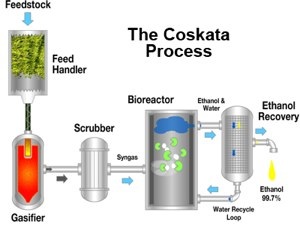
    CoskataFrom the 2008-09 "winter of our discontent"

    to 2009's "Summer of Algae," biofuels have made a remarkable journey in the past six months. But what has become of the former darling of industry dreams - cellulosic ethanol - a fuel and processing technology that one wag said "always was, and always will be five years away"?

    While attention this year has been justly diverted to the entry of ExxonMobil into the algae race, not to mention the heady progress towards commercialization at PetroAlgae, Solazyme, Algenol, Sapphire Energy, Aurora and Solix just to name a few, the industry formerly known as "cellulosic ethanol" has been quietly transformed into something that is just as much about cellulose, but not nearly as much about ethanol.

    Cellulosic ethanol was promoted as "not your Dad's ethanol," but the leading companies today are not producing "your Dad's cellulosic ethanol" either.

    Here are some trends. More trends and analysis of the cellulosic frontier in "Sugar, Sugar: the transformation of cellulosic ethanol" at biofuelsdigest.com.

    It's the cheap sugars, stupid. No matter what anyone describes as the "Holy Grail of Biofuels" or "the mother of all biofuels challenges," they are the same thing. Sugar, sugar. Whether it is tricking algae to convert sunlight and CO2 into sugars that it will later convert to oils, or making fermentable simple sugars from landfill waste or switchgrass, the key to making fuels affordable is the total cost of the simple sugar.

    Sustainable, affordable, reliable, available. SARA is the remarkable acronym coined by Tom Murphy of Woodland Natural Resources for what biomass must be if it to be useful as a feedstock for the new fuels and chemicals.

    "One word: Plastics". Whatever methanol's or ethanol's shortcomings as a fuel, they are a remarkable platform for chemicals. Upgrading from a base, options like propylene and polyethylene come on to the table, once the simple sugars of biomass have been converted into a simple alcohol. Companies like ZeaChem and LS9 have increasing focus on renewable chemicals, and are finding backers like Dow Chemical who are looking for sustainable sources far away from the Middle East and other hotspots where manufacturing is based to be close to the feedstocks.

    More at biofuelsdigest.com.
    Butamax
    Producer News

    In Washington, the Department of Energy is offering a webinar on July 29th on "How to Estimate the Economic Impacts from Renewable Energy". The webinar will feature a DOE-developed tool to estimate the economic impacts from renewable power generation. Participants will learn to use an online economic model-called Jobs and Economic Development Impacts (JEDI)-to design and run an economic impacts analysis and interpret the results.

    In Virginia, Dynamotive announced that independent analysis of upgraded BioOil samples have confirmed 20 percent gasoline, 30 percent jet, 30 percent diesel, and 20 percent vacuum gasoil fractions. The company uses a pyrolysis process to produce BioOil from lignocellulosic biomass, which is then hydro-reformed to a Stage 1 gas-oil equivalent or upgraded to transportation grade fuels in a State 2 hydrotreating process.

    In Iowa, POET confirmed that it is targeting payments to farmers of $30 to $60 per ton for corn stover (cobs and stalk), and said that farmers could increase these payments through the Biomass Crop Assistance Program. An Iowa farm averages 1.5 tons of corn stover per acre, or $45-$90 per acre in value before BCAP payments are considered.
    ABOAlgae Biomass Summit
    October 7-9, 2009


    San Diego Marriott and Marina (California)
    Exploring the emerging industry of algae as feedstock for biofuels and its related products.

    Registration, sponsorship and speaking info.
    World Opinion

    From the New York Times: "The catch is that biobutanol has always been very expensive to produce (which is why it was abandoned after widespread use in the first half of the 20th century). DuPont says it has a new way of making biobutanol, using a microbe. "We will be at a cost-equivalent of ethanol on an energy basis."

    From the Energy Tribune: "Methanol makes a fine racing fuel but is entirely unsuited for mass market application. I'm perplexed why one member of Congress would be quoted as saying he wouldn't have supported the Waxman-Markey bill without its methanol provision...Start with the energy side of these drawbacks. Turning natural gas into methanol consumes around 1/3 of the energy content of the gas...We'd be much better off just putting the natural gas directly into cars."
    BiomassAdvisors.com
    International News

    In China, the Motley Fool said that 97 percent of its 806 investors in its CAPS community who have rated Gushan Environmental Energy said that the company will outperform the S&P 500, and that the company has earned a five-star investing ranking from the Fool.

    In the UK, an annual review of emissions by the household of Prince Charles revealed that the Prince's estate's reduced overall carbon emissions by nine percent. The remaining 3,775 tons of CO2e emissions were offset with investments in an agency that promoted tree planting and conservation. The Prince's efforts have included a conversion of Jaguar and Land Rover vehicles to used cooking oil-based biodiesel.

    In Canada, Lignol Energy reported a full-year loss of $6.2 million compared to a loss of $4.6 million for the previous year, and said that the wider losses reflected an increase in R&D spending to $13.3 million. Lignol CEO Ross MacLachlan said that the company's 2010 goals are to "evaluate specific locations and opportunities for constructing a major commercial demonstration plant."
    Research News

    In Colorado, BBI International released the first in what it said would be a series of state-level reports on the impact of installing biomass-fired combined heat and power (CHP) facilities at ethanol facilities. The reports analyze the economic impact of the CHP facility, as well as the biomass required to run the plant, the capital costs, and impact of the plant on projected prices for natural gas, electricity, and biomass.
    Policy & Policymakers

    In North Dakota, Gov. John Hoeven said that he is seeking $35 million in federal energy grants, on behalf of Great River Energy, to install a new steam system at the Spiritwood Industrial Park near Jamestown. Hoeven said that the project's investors would cover the remaining $340 million of the total investment required. Plans are in place to expand the Spiritwood operation to include a biofuel facility.
    Consumer, Fleet and Event News

    In Brazil, Alkol has developed a 1HourFlex technology, and said that the system "allows any car to run on any amount of gasoline or ethanol in less than 1 hour". The system has 3 components: an Electronic Converter that alters fuel injection timing, an Ignition Remapper to alter spark plug firing time, and a Cold Start System to quickly start on cold days. 
    Financial News

    The Biofuels Digest Index™ (BDI), a basket of public biofuels stocks, gained 1.52 percent to 57.57 on algae and Big Grain advances.  For the day, Archer Daniels Midland (ADM) gained 1.90 percent to $28.47, while BP advanced 1.26 percent to $48.94.  Among small caps, PetroAlgae (PALG.OB) gained 17.38 percent to $9.39. Overall, advances led declines 2 to 1 for the day.
    Hot Topics from Past Issues

    ExxonMobil turns on to drop-in biofuels, algae.
    Who's Your Daddy?:
    A Special Report on biofuels investments and investors.
    A common sense theory
    of indirect land use change.
    Algae to the rescue?
    Two reports address the futurescape as advanced biofuels spark "everything vs. fuel" scramble?
    Drop In, Tune Out, Turn On
    : new thinking for new days in bioenergy. The importance of drop in fuels, the unimportance of the current debate over first-gen fuels.
    Petro Algae debuts new drop-in fuel process for green diesel from algae: Special Report.
    The Blunder Crop: a Biofuels Digest special report on jatropha biofuels development
    The Hottest 50 Companies in Bioenergy
    One billion gallons by 2014: algal fuel price, capacity projections
    Renew Energy
    These stories and more are available at BiofuelsDigest.com. Your comments and story requests are warmly welcome: email me at jlane@biofuelsdigest.com. Jim Lane, Editor, Biofuels Digest.

    Fuente:
    Difundan libremente  este artículo
    CONSULTEN, OPINEN , ESCRIBAN .
    Saludos
    Rodrigo González Fernández
    Diplomado en "Responsabilidad Social Empresarial" de la ONU
    Diplomado en "Gestión del Conocimiento" de la ONU
     
    www.consultajuridica.blogspot.com
    www.el-observatorio-politico.blogspot.com
    www.lobbyingchile.blogspot.com
    www.calentamientoglobalchile.blogspot.com
    www.respsoem.blogspot.com
    Oficina: Renato Sánchez 3586 of. 10
    Teléfono: OF .02- 2451113 y  8854223- CEL: 76850061
    e-mail: rogofe47@mi.cl
    Santiago- Chile
    Soliciten nuestros cursos de capacitación  y consultoría en LIDERAZGO -  GESTION DEL CONOCIMIENTO - RESPONSABILIDAD SOCIAL EMPRESARIAL – LOBBY – ENERGIAS RENOVABLES   ,  asesorías a nivel nacional e  internacional y están disponibles  para OTEC Y OTIC en Chile